


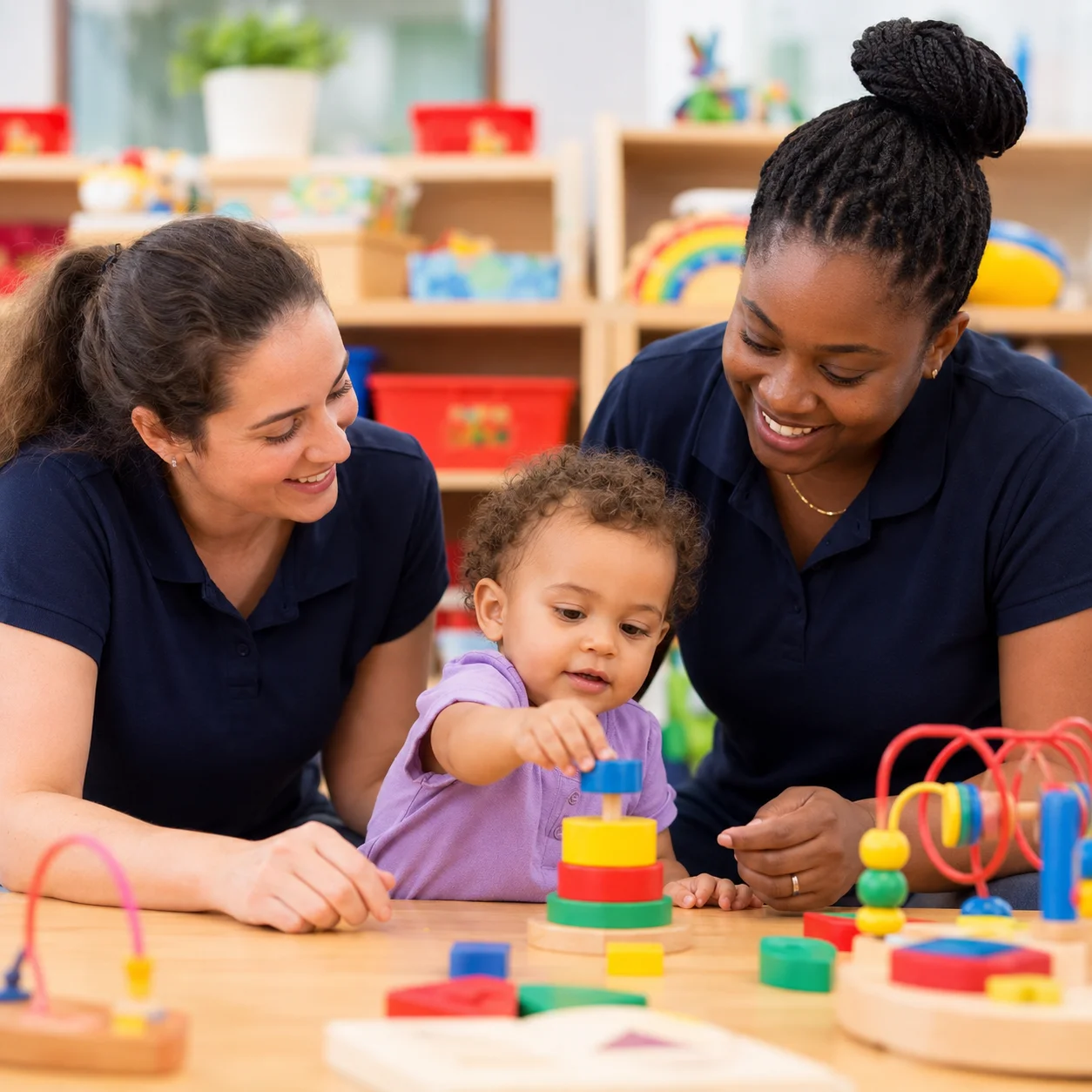
The toddler years can feel like a new stage every week. One day your child wants help with everything. The next day, they want to do it all on their own. They are learning words, testing routines, building preferences, and figuring out how to be around other children.
That is why toddler childcare needs more than supervision. Toddlers need patient adults, safe spaces, repeated routines, and activities that give them room to practice new skills. They also need a classroom where big feelings are expected and handled with care.
For parents, this stage brings new questions. Will my child adjust? Will they learn to share? How will teachers handle frustration, transitions, meals, naps, or potty training? The right toddler childcare program should help answer those questions clearly.
Why Toddler Childcare Matters
Toddler childcare matters because children ages 2 to 3 are learning how to move from constant adult help toward small moments of independence. They still need close guidance, but they are ready to practice doing more for themselves.
This is the age when children often begin using more words, making choices, showing stronger emotions, and noticing other children in new ways. They may want to help clean up, choose an activity, join group time, or try a task without help.
A good toddler classroom gives children a safe place to practice these skills. It also gives them repeated chances to learn routines, follow simple directions, and interact with others.
Toddler childcare should support:
- Independence
- Language growth
- Social interaction
- Motor skills
- Simple routines
- Creative expression
- Emotional development
- Parent communication
This stage is not about rushing children. It is about giving them steady opportunities to try, learn, and grow with support nearby.
How Routine Helps Toddlers Feel Secure
Routines help toddlers feel secure because they make the day easier to understand. When children know what comes next, transitions can feel less overwhelming.
A toddler’s day usually includes many changes: arrival, classroom play, group time, meals, snacks, diapering or toilet training, outdoor play, nap time, and pickup. Without routine, those changes can feel confusing. With routine, children begin to recognize the rhythm of the day.
A predictable routine can help toddlers:
- Settle into the classroom
- Move from one activity to another
- Understand simple expectations
- Practice independence
- Participate in group activities
- Rest more comfortably
- Feel more confident at pickup and drop-off
This does not mean every moment should be rigid. Toddlers still need flexibility. Some days they may need extra comfort. Some days they may need more time during a transition. A good routine gives structure while still leaving room for the child’s needs.
How Toddler Childcare Builds Independence
Toddler childcare builds independence by giving children small, age-appropriate chances to do things for themselves. These moments may look simple, but they are important.
A toddler may practice washing hands, picking a toy, putting materials away, sitting for snack, following a short direction, or helping with cleanup. These are early steps toward confidence.
Independence at this age does not mean expecting toddlers to manage everything alone. It means giving them chances to try with patient help nearby.
In a toddler classroom, independence can grow through:
- Choosing an activity
- Carrying a small item
- Cleaning up toys
- Washing hands before meals
- Sitting with a group
- Trying art materials
- Moving safely around the classroom
- Practicing diapering or toilet training routines
Children learn through repetition. A task that feels difficult at first can become familiar after they practice it many times. Teachers support this by giving clear directions, gentle reminders, and enough time for children to try.
How Toddlers Learn Social Skills
Toddlers learn social skills through practice, repetition, and adult guidance. Sharing, taking turns, waiting, and using words do not happen all at once.
At this age, children are still learning how to play near other children and with other children. They may want the same toy, need help naming feelings, or struggle when another child does something unexpected. This is normal for the toddler stage.
A strong toddler classroom helps children learn how to:
- Take turns
- Share space
- Use simple words
- Notice a friend’s feelings
- Join group activities
- Practice gentle hands
- Wait for help
- Handle frustration with support
Teachers play an important role here. They help children understand what is happening, model simple language, and guide them back to the activity. Over time, these repeated moments help toddlers build early social confidence.
How Structured Play Supports Learning
Structured play helps toddlers learn while staying active, curious, and engaged. Toddlers often learn best when they can touch, move, build, sort, listen, repeat, and explore.
At Park Cities Day School, our Toddler I program supports children ages 2 to 3 through structured play and learning.
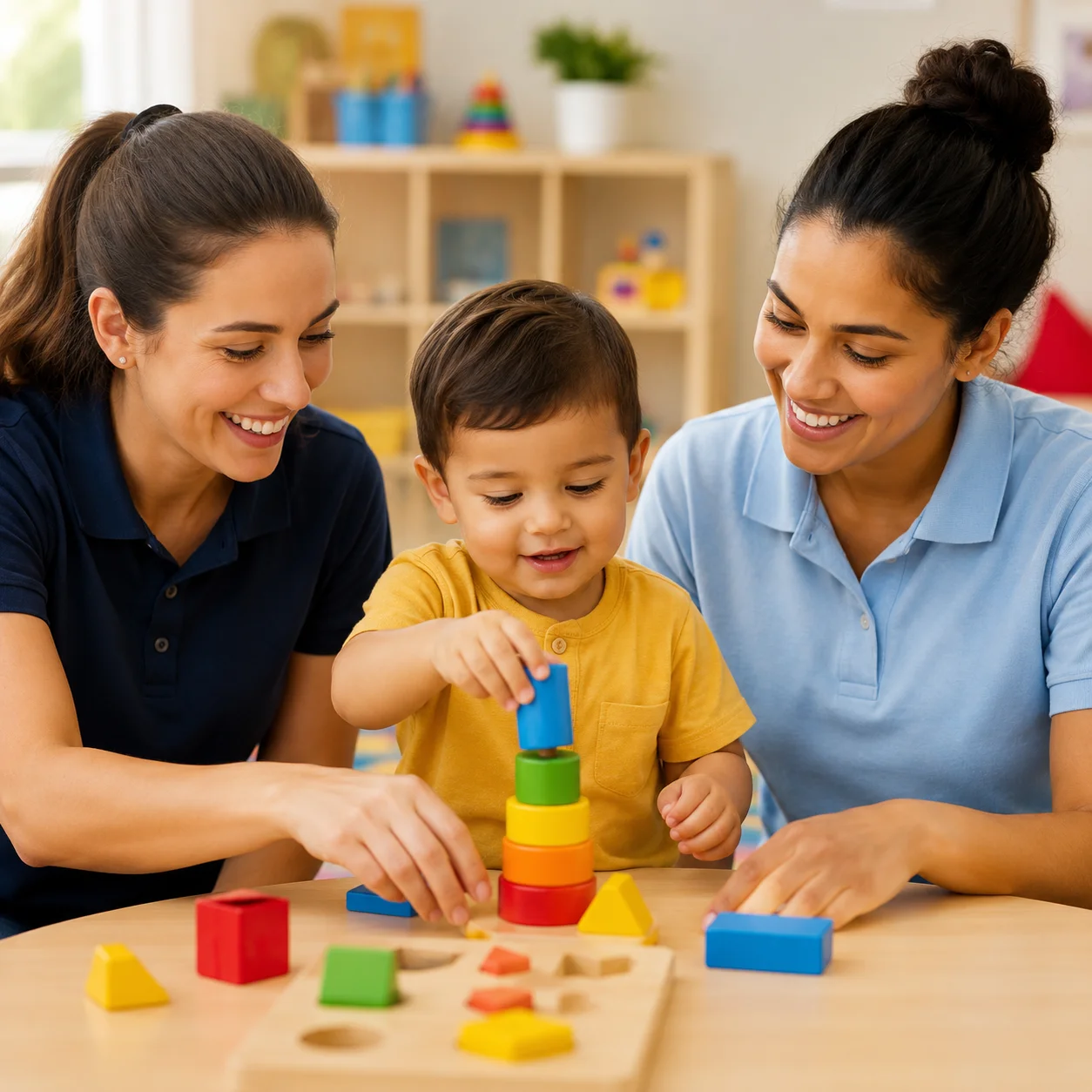
In this stage, children begin working with more structure while still having room to explore. Activities may support colors, numbers, shapes, vocabulary, counting, art, movement, and sensory learning.
Structured play can include:
- Sorting objects by color or shape
- Listening to songs and stories
- Repeating new words
- Counting during activities
- Creating art projects
- Building with blocks
- Practicing puzzles
- Moving during indoor or outdoor play
- Joining group time
The goal is not to make toddlers sit still for long lessons. The goal is to help them learn through experiences that match their age and attention span.
A strong classroom helps show why early childhood education matters in a child’s first years.
How Group Time Helps Toddlers Practice Participation
Group time helps toddlers practice listening, sitting with others, following simple routines, and joining shared activities. These are early classroom skills that develop gradually.
For toddlers, group time may include songs, stories, calendar, weather, shapes, colors, numbers, or letters. The value is not only in the topic being introduced. It is also in the practice of being part of a group.
Children begin to learn how to watch the teacher, listen for directions, respond to songs, and notice what classmates are doing. Some toddlers participate right away. Others observe first. Both responses can be part of learning.
Group time helps toddlers practice:
- Listening
- Waiting
- Repeating words
- Following gestures
- Sitting with classmates
- Joining familiar songs
- Recognizing classroom patterns
These skills help children become more comfortable with structure as they move toward later toddler stages and preschool.
Why Movement and Outdoor Play Matter
Movement matters because toddlers need space to use their bodies. Running, climbing, riding, reaching, balancing, and active play all support physical development.
Outdoor play also gives toddlers a healthy change of setting. It helps them use energy, practice coordination, and explore the world around them with supervision.
Age-appropriate movement can support:
- Gross motor skills
- Balance
- Coordination
- Confidence
- Social play
- Healthy routines
- Better transitions back to the classroom
Toddlers are not designed to sit all day. They need active learning, outdoor time when weather allows, and chances to move safely. A good toddler childcare program understands that movement is part of learning.
What Parents Should Look For in Toddler Childcare
Parents should look for toddler childcare that feels safe, patient, structured, and age-appropriate. The classroom should support independence without expecting too much too soon.
The toddler years bring new priorities, so it helps to know what families should consider before choosing childcare and early education programs.
When comparing toddler childcare options, parents can look for:
- Patient teachers
- Clean and safe classrooms
- Clear daily routines
- Age-appropriate activities
- Time for movement and outdoor play
- Support for language development
- Gentle guidance for social skills
- Help with transitions
- Parent updates
- Support for diapering or toilet training
Parents should also pay attention to how the classroom feels. Are children engaged? Are teachers calm? Are routines clear? Does the environment feel warm and steady?
A toddler program should make parents feel comfortable asking practical questions.
How Toddler Childcare Helps With the Next Stage
Toddler childcare helps prepare children for the next stage by giving them repeated practice with routines, communication, social interaction, and independence.
As toddlers grow, they begin to understand more classroom expectations. They may become more comfortable with group time, cleanup, outdoor play, meals, rest, and simple directions. These skills help children move forward with more confidence.
For children in Toddler I, the day becomes more structured as they prepare for the Toddler II classroom. That structure can help children build confidence while still receiving the care and flexibility they need.
The next stage does not happen all at once. It grows through daily practice.
How Parent Communication Supports Toddler Growth
Parent communication matters because toddlers are changing quickly. Parents and teachers both benefit from sharing updates about routines, language, behavior, meals, rest, and new skills.
A toddler may be working on new words, potty training, separation, sharing, or adjusting to a classroom routine. Clear communication helps everyone understand what the child needs.
Helpful parent updates may include:
- Nap or rest notes
- Meal and snack updates
- Diapering or toilet training progress
- Mood and adjustment notes
- New words or skills
- Classroom participation
- Social interactions
- Supplies needed from home
This communication helps parents stay connected to the day. It also helps teachers support the child with better context from home.
FAQs About Toddler Childcare
What should toddler childcare include?
Toddler childcare should include safe supervision, daily routines, play, movement, language development, social interaction, rest, meals, and age-appropriate learning activities.
How does toddler childcare help with independence?
Toddler childcare helps children practice small tasks, such as choosing activities, cleaning up, washing hands, joining group time, and following simple directions with support.
Why are routines important for toddlers?
Routines help toddlers know what to expect. This can make transitions easier and help children feel more secure during the day.
What age is Toddler I for?
Toddler I is for children ages 2 to 3. This stage often includes more structured play, early learning activities, social interaction, and preparation for the next classroom stage.
Conclusion
Toddler childcare should help children practice independence, social skills, routines, movement, and early learning in a safe and patient environment. The best fit gives toddlers room to grow while giving parents clear communication and confidence.
At Park Cities Day School, we have served Dallas families for more than 30 years, and we understand how much patience, structure, and communication matter during the toddler years. Call us to ask about current toddler program availability, classroom fit, and next steps for your child.
Leave a Reply